

Shop Our Latest Promotions Here!
E. EXCEL North America Blog
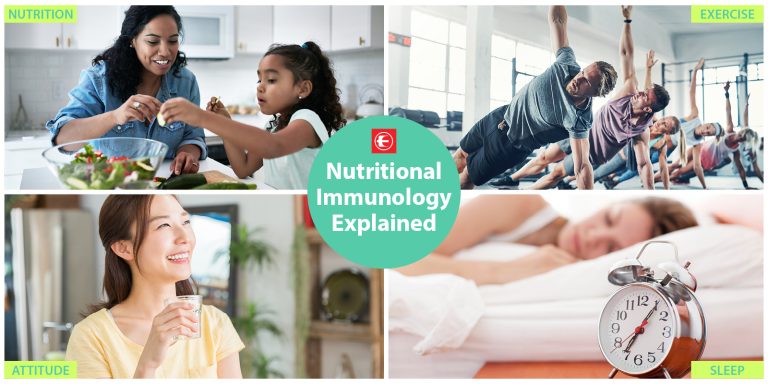
Nutritional Immunology Explained
NI Overview
Nutritional Immunology is a science that studies the link between nutrition and the immune system. A healthy immune system helps the body stay healthy. However, when deprived of sufficient nutrients, the immune system can become weak and unable to defend against outside threats. The human body requires a constant supply of nutrients. The science of Nutritional Immunology states a balanced nutrition can help prevent illness. The relationship between nutrition and immune response forms the basis of Nutritional Immunology.
Nutritional Immunology also follows the four pillars of health: diet and nutrition, regular exercise, sleep, and a positive mental outlook. All four of these pillars are connected. For example, if you don’t sleep well, you may not eat well. And when you are tired, the last thing you want to do is go to the gym. People who are fully functioning pay attention to all four pillars. They must all be working together for better health.
Diet and Nutrition
Can you recall when you last ate a balanced diet or actively avoided greasy, high-cholesterol food and alcoholic beverages, opting instead for fruits, vegetables, and other healthy foods? The truth is many people only do so when they fall sick, with the hope that a healthy diet will help them recover faster. Most of us only pay attention to proper nutrition when we are sick. Few actually take precautionary measures that could have prevented the illness altogether. Research shows that about two thirds of American adults tend to eat more foods high in fats and refined sugars instead of plant foods. This leads to an insufficient intake of essential nutrients needed to maintain health. Therefore, a proper diet and nutrition is more important than ever to help support the body’s functions.
Regular Exercise
Regular physical activity is one of the most important things you can do for your health. Being physically active can improve your brain health, help manage weight, reduce the risk of disease, strengthen bones and muscles, and improve your ability to do everyday activities. Additionally, adults who sit less and do any amount of moderate-to-vigorous physical activity gain some health benefits. Everyone can take advantage of the health benefits of physical activity.
Sleep
Studies show that adults should get seven to eight hours a night for good health. Some people insist that they can get away with four or five hours of sleep. However, while these so-called “short sleepers” do exist, they are a very small percentage of the population. The rest of the self-identified “short sleepers” are mostly staying alert by drinking coffee or other caffeinated drinks, which also can take a negative toll on health. Not getting enough sleep can raise the risk of health consequences. However, getting enough sleep isn’t just about the number of hours you’re asleep. It’s also about the quality of sleep and that you stay on a regular schedule so that you feel rested when you wake up.
Positive Mental Outlook
Positive thinking means approaching life’s challenges with a positive outlook. However, it does not necessarily mean avoiding difficult situations. Instead, positive thinking means making the most of potential obstacles, trying to see the best in other people, and viewing yourself and your abilities in a positive light. Positive thinking is linked to a wide range of health benefits, including better stress management, enhanced psychological health, increased physical well-being, longer life span, and reduced risk of cardiovascular-related death. A 2018 study published in the Journal of Aging Research found that having a positive mental attitude was linked to decreased mortality over a 35-year period. People who had a more positive outlook were also more likely to get regular physical exercise, avoid smoking, eat a healthier diet, and get more quality sleep.
In conclusion, Nutritional Immunology helps us to discern what proper nutrition is in a world of myriad food choices. Therefore, it is essential to understand why the science of Nutritional Immunology plays a vital role in our daily lives. It highlights that prevention is better than cure, and that the body is its best doctor. The immune system’s role is to defend, cleanse and repair. If we protect and strengthen the immune system through proper nourishment, it can better repair and revitalize the body. Only then will our immune systems receive the support they need, and overall wellness can be achieved.*
Resources:
- https://rogertay.wordpress.com/2016/09/04/prevention-is-better-than-cure/
- https://nutritionalimmunology.com/new-blog/2017/5/10/the-essence-of-nutritional-immunology-prevention-is-better-than-cure
- https://www.cdc.gov/physicalactivity/basics/pa-health/index.htm#:~:text=Being%20physically%20active%20can%20improve,activity%20gain%20some%20health%20benefits.
- https://health.ucdavis.edu/blog/cultivating-health/better-sleep-why-its-important-for-your-health-and-tips-to-sleep-soundly/2023/03
- https://www.verywellmind.com/what-is-positive-thinking-2794772
- Paganini-Hill A, Kawas CH, Corrada MM. Positive mental attitude associated with lower 35-year mortality: The Leisure World Cohort Study. J Aging Res. 2018;2018:2126368. doi:10.1155/2018/2126368